
A testable hypothesis, not a reputation expense
The word ‘environmental’ does not make a project commercially effective. Value appears when a company defines the goal, designs a clear participant journey and measures the result. That result may be a return visit, employee participation, accepted packaging or repeat actions.
Correlation must not be confused with causation. If environmentally active customers buy more often, that does not prove that the project changed their behaviour. It does, however, help formulate a hypothesis that can be tested with the company’s own audience.
What the public evidence shows
McKinsey and NielsenIQ analysed sales of 600,000 SKUs from 44,000 US brands between 2017 and June 2022. Products carrying environmental and social claims averaged 28% cumulative growth, compared with 20% for products without such claims.
The authors explicitly describe this as an association, not proof of causality. The result cannot be turned into a promise that an environmental label will automatically increase sales. Its value is that sustainability is linked to actual purchasing behaviour and can therefore be tested and measured.
VkusVill: the scale of eco-services is measurable
According to VkusVill’s published 2025 results, 1.22 million customers used its eco-services each month and almost 3.5 million people completed at least one environmental action during the year. Customer-supplied recyclables reached almost 1.3 million kg, 38% more than a year earlier.
These figures confirm reach and infrastructure growth, but do not by themselves prove incremental revenue. The edited article therefore excludes private commercial metrics without an accessible primary source: a public article should distinguish confirmed evidence from a partner’s internal analysis.
Five conditions for a project to support the business
1. One clear objective
Design the project around a specific result: traffic to a location, returned packaging, employee engagement or a verified collection volume.
2. Minimal participant effort
The point is easy to find, the rules fit into a short instruction and the reward requires no lengthy registration or manual approval.
3. A loyalty link
When an environmental action is linked to a customer account, the company can evaluate repeat participation and segment hypotheses, subject to consent and data-protection requirements.
4. Verifiable results
Participants, actions, units or material weight are recorded in a system. Each metric has a defined source and calculation method before launch.
5. An improvement loop
The team compares locations, mechanics and rewards, then adjusts the journey. The environmental initiative becomes a product rather than a one-off communication campaign.
What TrashBack can provide
A corporate programme can combine several modules in one participant journey:
- a reverse vending or branded collection point with actions recorded in the app;
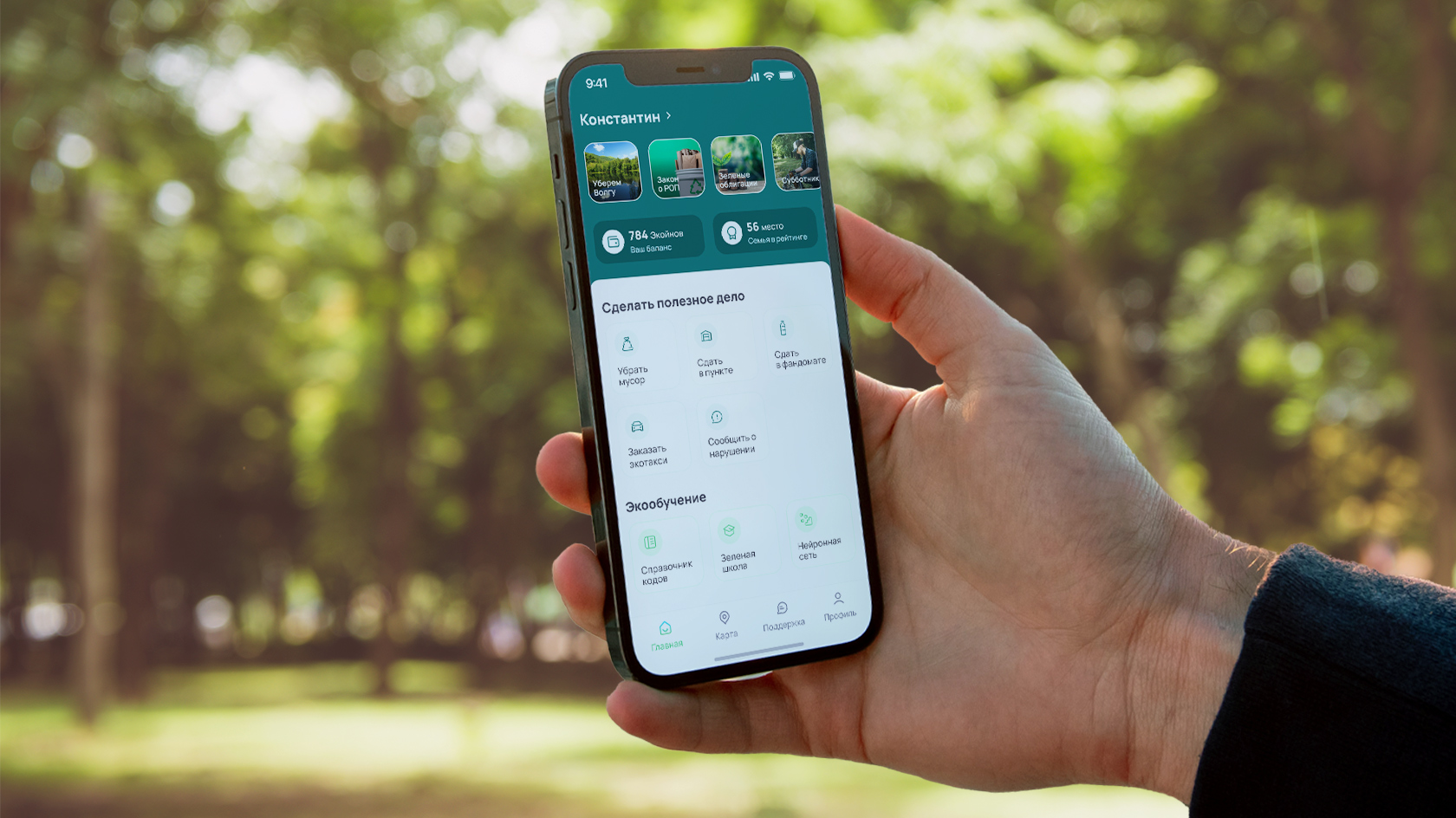
- Ecocoins and partner reward mechanics;
- a Digital Clean-up programme for employees and their families;
- territory clean-up services and environmental challenges;
- large-format printed enclosures, furniture and recycled-plastic objects for the project space.
How to measure the effect
Before launch, record the baseline, target action and comparison period. Measure reach, repeat participation, engagement cost, collected material and what happens after a reward is issued. The project can then be discussed in business and environmental terms without substituting a polished report for an actual result.